

Where to study French in Kampala. If you have typed “where to study French in Kampala” into Google, you are already ahead of most people who simply wish they could speak another language. Kampala has quietly become one of East Africa’s most exciting cities to learn French, thanks to a growing number of language institutes, an expanding francophone business community, and a wave of young professionals who want an edge in tourism, diplomacy, logistics, and international trade. This guide walks you through everything you need to know: why French matters right now, what a good French program should include, how much it costs, how long it takes, and exactly where in Kampala you can enroll today.
Whether you are a university student preparing for a scholarship in a francophone country, a tour guide who wants to serve more international clients, an NGO worker heading to the Democratic Republic of Congo, Rwanda, or Burundi, or simply someone who loves the sound of the language, this article is written to answer every practical question you have — and to point you toward real, verifiable options in the city, starting with Uganda Language School.
Why Learn French in Kampala Today
French is not just a European language anymore — it is an African language. Uganda is surrounded by French-speaking neighbors: the Democratic Republic of Congo, Rwanda (which has strong francophone ties alongside English and Kinyarwanda), and Burundi. Millions of French speakers live within a short flight or drive of Kampala, and that proximity creates constant demand for interpreters, customer service agents, tour operators, cross-border traders, and diplomats who can bridge the language gap.
Beyond geography, French remains one of the official working languages of the African Union, the United Nations, and a long list of international NGOs headquartered in East Africa. Kampala hosts regional offices for organizations that operate across both English- and French-speaking Africa, and recruiters increasingly list “French language proficiency” as a preferred or required skill. Learning French in Kampala, rather than abroad, also means you train in an environment that already understands the code-switching between English, Luganda, Swahili, and French that many regional professionals use daily.
There is also a simple, personal reason many residents give: French opens the door to scholarships, exchange programs, and study opportunities in France, Belgium, Canada, and francophone Africa. A solid grounding at a local school before you travel saves both money and culture shock.
Growing Demand for French Speakers in Uganda’s Job Market
Uganda’s economy has become steadily more regional. Cross-border trade with the Democratic Republic of Congo alone is worth hundreds of millions of dollars annually, and much of that trade runs directly through Kampala-based logistics companies, banks, and trading houses. Employers in these sectors consistently struggle to find staff who are comfortable negotiating, documenting, and communicating in French.
Tourism is another major driver. Uganda welcomes francophone travelers from France, Belgium, Switzerland, Quebec, and francophone Africa who come for gorilla trekking, birdwatching, and cultural tourism. Tour companies that can offer a French-speaking guide have a real competitive advantage, and many now list French fluency as a hiring requirement rather than a bonus.
Then there is the diplomatic and humanitarian sector. Kampala is a regional hub for organizations serving the Great Lakes region, and francophone case workers, translators, and program officers are consistently in short supply. If you are exploring a career shift, pairing a professional certificate with French — for example, a hospitality qualification alongside conversational French — can be one of the fastest ways to become more employable in this market. You can browse practical, job-focused training options through Kenlink Institute’s course catalogue to see how language study pairs naturally with vocational skills.
What to Look for in a French Language School in Kampala
Not every French class in Kampala is built the same way, and choosing the wrong one can waste months of your time. Before you enroll anywhere, evaluate a school against these criteria:
Structured levels that map to a recognized framework. Good programs organize learning into clear stages — typically Beginner, Intermediate, and Advanced, or the internationally recognized A1 through B2 bands — so you always know exactly how much progress you have made and what comes next.
Realistic class sizes and genuine speaking practice. French is a spoken language first. A school that only drills grammar on a whiteboard without conversation clubs, listening exercises, or pronunciation coaching will leave you able to read but not actually talk to anyone.
Flexible scheduling. Working professionals, university students, and parents all have different availability. Look for morning, evening, weekend, and online options rather than a single fixed timetable.
Cultural immersion, not just vocabulary lists. The best programs include French films, music, cultural workshops, and speaking clubs so that the language sticks rather than being memorized and forgotten.
Transparent enrollment and fees. A trustworthy school publishes its application process clearly and does not hide costs until after you have committed.
Keep this checklist in mind as you compare your options — it is the fastest way to separate a serious language program from a class that will fizzle out after a few weeks.
Overview of Where to Study French in Kampala
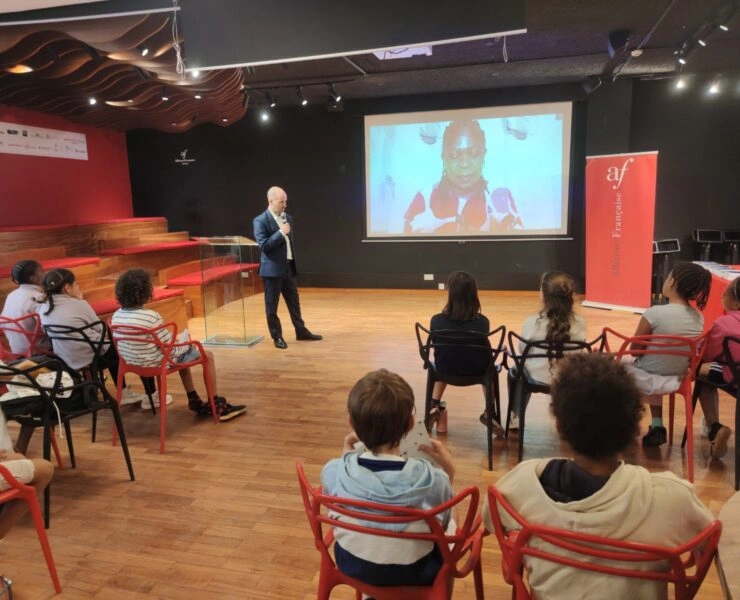
Kampala’s French-learning landscape includes a mix of dedicated language institutes, cultural centers, international schools, and online-first providers. The most established cultural option is Alliance Française Kampala, a long-running cultural center affiliated with the global Alliance Française network, which offers French classes for adults and children alongside cultural events and a resource library. There are also international and francophone schools in the city that follow French curricula for younger learners, and a handful of specialized language academies that combine French with vocational or professional training.
Among these, Uganda Language School has built a reputation specifically around flexible, career-oriented language education for teenagers and adults — people who need French for work, travel, or further study rather than for a school-leaving certificate. Because it is run under the wider Kenlink Institute umbrella, students also have access to vocational and professional development courses on the same campus, which is a genuine differentiator if you want to combine language learning with a practical qualification.
The rest of this guide focuses on what you can expect if you choose to study French at Uganda Language School, while also giving you honest context about the wider Kampala market so you can make the best decision for your goals, budget, and schedule.
Studying French at Uganda Language School (Kenlink Institute)
Uganda Language School offers one of the more comprehensive French programs available in Kampala, built specifically for learners who want real conversational ability rather than exam-only French. The French Language course is structured around 80 lessons and organized so that learners move steadily from foundational communication to advanced fluency, with grammar, vocabulary, pronunciation, and cultural studies woven into every stage.
What sets the program apart from a purely academic class is its emphasis on applied learning. Alongside standard lessons, students get access to French films, speaking clubs, and cultural workshops designed to build confidence in real conversation — the skill most classroom-only programs neglect. Because the school is affiliated with Kenlink Institute, a well-established vocational training provider in Kampala, students also benefit from an institution with existing partnerships and administrative infrastructure, rather than a small, informal tutoring outfit that might not exist in a year’s time.
The Language Courses page lists French alongside German, English, and Swahili, so if your goals shift over time — say, you start with French for a tourism job and later add Swahili for regional trade — you can continue studying at the same institution rather than starting over somewhere new.
French Course Levels and Curriculum at Uganda Language School
The French program is divided into progressive levels, generally spanning around six months per level, which gives learners enough time to actually absorb and practice what they are taught rather than rushing through material they will forget within weeks.
At the Beginner level, the focus is on essential greetings, everyday vocabulary, basic sentence structure, and enough listening practice to follow simple conversations. This stage is designed for someone who has never studied French before and needs a gentle, confidence-building entry point.
The Intermediate level builds on that foundation with more complex grammar (verb tenses, conditional structures, and connecting phrases), expanded vocabulary for work and travel contexts, and more demanding listening and reading exercises. By the end of this stage, most students can hold a functional conversation, write short messages and emails, and understand straightforward spoken French.
The Advanced level pushes toward genuine fluency: nuanced grammar, idiomatic expressions, debate and discussion practice, and exposure to authentic French media. Students at this stage are typically preparing for professional use of the language, further study abroad, or formal proficiency examinations.
Across all three levels, the curriculum includes more than 50 interactive lessons per level, along with recurring cultural components — French cinema screenings, music, and discussion clubs — that keep motivation high. If you want to see how the levels compare across languages offered at the school, the Language Courses overview is a useful starting point before you commit to French specifically.
Class Formats: Morning, Evening, Weekend and Online French Classes
One of the most practical advantages of studying at Uganda Language School is scheduling flexibility. The French Language programme is offered in morning, evening, weekend, and fully online formats, which means you do not have to choose between your job, your studies, and learning a new language.
Morning classes tend to suit university students and people with flexible daytime schedules, while evening classes are popular with working professionals who want to study after office hours. Weekend intensives appeal to people with demanding weekday jobs who prefer to concentrate their learning into fewer, longer sessions. The online option has become increasingly popular for students outside Kampala, or for those balancing family and travel commitments who cannot commit to a fixed physical timetable.
Regardless of format, the same structured curriculum and instructor support apply — you are not getting a “lighter” version of the course by choosing online or weekend classes, simply a different delivery schedule built around your life.
Meet the Team Behind Your French Learning Journey
A language program is only as good as the people teaching it. Uganda Language School operates under the leadership associated with Kenlink Institute’s broader mission to “empower individuals with knowledge, skills, and experiences that inspire growth and success.” That philosophy shows up in the classroom through instructors who focus on practical, engaging teaching rather than rote memorization.
The About Us page outlines the school’s approach: patient, experienced instructors, modern learning resources, and a genuinely supportive environment for learners who may be nervous about tackling a new language for the first time. The institution also maintains partnerships with established organizations, which lends a level of credibility and continuity you want from any school you are trusting with your time and tuition fees.
If you are the kind of learner who wants to know exactly who will be guiding you before you sign up, it is worth spending a few minutes reading through the About Us section so you understand the values and teaching philosophy driving the classroom experience.
Beyond French: Other Language Options in Kampala
While this guide is centered on French, it is worth knowing that Kampala’s demand for multilingual skills extends well beyond one language. Many students who start with French later add a second or third language once they see how quickly new opportunities open up.
Uganda Language School also offers a German Language course, popular among students pursuing study or work opportunities in Germany and other German-speaking countries in Europe. The English Language course remains in steady demand from learners who need stronger academic or professional English, including for international exams and workplace communication. There is also a Swahili Language course, which is increasingly valuable given Swahili’s growing status as an official language of the East African Community and the African Union.
Many learners strategically pair French with Swahili, since together they cover an enormous swath of the African continent — from Central and West Africa through to East Africa. If your long-term goal is regional mobility for business, diplomacy, or tourism work, it is worth exploring the full Language Courses catalogue rather than viewing French in isolation.
If cost or duration is what is holding you back from committing to a language course, the school’s blog has two useful reference articles worth reading before you decide: how much it costs to study English in Uganda and how long it takes to study German in Uganda. Both give a realistic sense of the time and financial commitment involved, and the same general structure applies closely to the French program as well.
Vocational and Professional Skills Training Alongside French
One advantage that sets Uganda Language School apart from a standalone language center is its connection to Kenlink Institute, which offers an extensive range of vocational and professional courses on the same campus network. This matters because language skills become far more valuable when paired with a marketable trade or profession.
For example, a student pursuing a career in tourism could combine French lessons with training from Kenlink Institute’s course catalogue, which spans hospitality, tour guiding, and business-focused programs. Someone interested in the transport and logistics sector — an industry where French is genuinely useful for cross-border trade with the Democratic Republic of Congo — might look into heavy machinery and driving training alongside their language studies. Aspiring entrepreneurs can explore business consultation services to sharpen the commercial side of their skill set, while learners interested in beauty and personal-care careers can look at programs like the Certificate in Hair Dressing and Salon Management.
This combination — a language qualification plus a vocational certificate — is one of the most effective ways to stand out in Uganda’s competitive job market. Employers are far more likely to hire (and pay a premium for) a candidate who can both perform a skilled job and communicate with francophone clients, partners, or supervisors. If you are weighing your options, it is worth browsing Kenlink Institute’s admissions information to see how language and vocational programs can be scheduled together, and checking the dedicated language courses overview on the Kenlink Institute site for pricing structured by level.
It is also worth looking ahead to what comes after you finish studying. Graduates who leave with both a language certificate and a vocational qualification are often better positioned to respond to postings on the institute’s careers and job opportunities page, and many go on to apply what they learned through the institute’s own partnership network, which connects graduates with employers across tourism, logistics, and business services. If you already know you want to combine French with a vocational track, you can submit a single application covering both programs rather than filling out separate forms for each course.
Alliance Française Kampala and Other French Study Options
In fairness to anyone comparing options, it is worth acknowledging the other established players in Kampala’s French education space. Alliance Française Kampala is the city’s longest-running dedicated French cultural center, offering classes for both adults and children, along with a library, film screenings, and cultural events tied to the global Alliance Française network. It is a strong choice for learners who want deep cultural immersion and access to France-linked scholarship and exchange programs.
There are also a small number of international and francophone schools in Kampala that follow French national curricula, generally aimed at younger students already enrolled in a francophone education track rather than adult learners seeking evening or weekend classes. Independent tutoring platforms and language-booking directories can also connect you with private French tutors in the city, though quality and consistency vary widely since there is no shared curriculum or accreditation across independent tutors.
What tends to differentiate a career-focused institute like Uganda Language School from a purely cultural center is the flexibility of scheduling, the option to combine language study with vocational training through Kenlink Institute, and a curriculum explicitly built around workplace and travel readiness rather than cultural enrichment alone. Neither approach is “wrong” — it depends entirely on whether your goal is cultural immersion, an internationally recognized qualification, or fast, practical fluency for work and travel.
How Much Does It Cost to Study French in Kampala?
Cost is one of the biggest factors in choosing a French program, and it varies significantly depending on the type of institution, class format, and level structure. Dedicated cultural centers typically charge per term or per level, with additional registration and material fees. Independent tutors may charge hourly rates that add up quickly over a full course of study, while structured institutes generally offer per-level or full-course pricing that is easier to budget around.
At institutes affiliated with vocational training providers, French is often priced per level, with the option to pay for a single level at a time or commit to the full course upfront, sometimes at a discounted combined rate. This structure is helpful for learners who are not yet sure how far they want to take their French and prefer to test the waters with one level before committing to the full program. It is also common to see additional savings offered to students who enroll in more than one language at the same institution, since administrative and material costs can be shared across courses.
Before enrolling anywhere, always ask for a full, itemized breakdown of tuition, registration fees, and materials, and clarify what happens if you need to pause or repeat a level. The Applications page at Uganda Language School is a good example of the kind of transparency you should expect — it outlines the enrollment process and lets you choose your language and starting level before you commit financially.
How Long Does It Take to Become Fluent in French?
Fluency timelines depend heavily on how much time you can dedicate each week, how immersive your practice is outside the classroom, and your starting point. As a general guide, most structured programs allocate roughly six months per level, meaning a complete beginner working through Beginner, Intermediate, and Advanced levels should expect to spend somewhere in the range of a year and a half to two years to reach strong conversational and professional fluency, assuming consistent attendance and regular practice.
That said, “fluency” itself is not a single fixed target. Many learners reach a comfortable conversational level — enough to handle travel, casual work interactions, and simple written communication — well before completing the most advanced coursework. If your goal is simply to serve francophone tourists as a guide or handle basic customer interactions, the Intermediate level may already be sufficient. If your goal is professional translation, diplomatic work, or further academic study in a francophone country, you will want to complete the full Advanced level and continue practicing independently afterward.
Consistent exposure outside the classroom — French films, music, speaking clubs, and even just labeling household items in French — meaningfully speeds up the process compared to attending classes alone. This is exactly why programs that build cultural immersion into their curriculum, rather than treating it as an optional extra, tend to produce faster, more confident speakers.
Step-by-Step: How to Apply for French Classes in Kampala
Getting started is more straightforward than most people expect. Here is the general process you can follow to enroll in a French program in Kampala:
First, decide on your starting level. If you have never studied French before, you will start at the Beginner level. If you have some prior exposure — perhaps from secondary school or casual study — many schools offer a short placement conversation to determine whether Intermediate is a better fit.
Second, choose your preferred class format. Decide whether morning, evening, weekend, or online classes best fit your work, school, or family schedule, since this will shape your day-to-day commitment for the duration of the course.
Third, gather your basic enrollment details. Most schools require simple identification information and contact details rather than complicated academic transcripts, particularly for adult and professional learners.
Fourth, submit your application. At Uganda Language School, you can complete this directly through the online Applications page, or visit the admissions office in person if you prefer a face-to-face conversation about your goals before enrolling.
Fifth, confirm your fees and schedule. Once your application is reviewed, you will receive confirmation of your class schedule, fees, and start date, along with any materials you need to bring to your first session.
Finally, if you are also interested in pairing French with a vocational qualification, it is worth reviewing Kenlink Institute’s admission requirements at the same time, so you can plan a combined schedule from day one rather than adding a second course later and having to rework your timetable.
Tips for Learning French Faster as a Beginner in Kampala
Enrolling in a good class is the most important step, but what you do outside the classroom matters just as much. Immerse yourself in French media as early as possible — even simple children’s shows, music, or subtitled films help train your ear to the rhythm of the language long before you can understand every word.
Practice speaking out loud from day one, even if you make mistakes constantly. Learners who wait until they feel “ready” to speak almost always progress more slowly than those who practice imperfect French from the very first week. If your school offers speaking clubs or conversation partners, attend consistently rather than skipping sessions when you feel unprepared — those sessions are precisely where real fluency is built.
Build small daily habits rather than relying solely on class time. Fifteen minutes of vocabulary review, a French podcast during your commute, or labeling objects around your home in French can compound significantly over months of study. Pair new vocabulary with real sentences rather than memorizing isolated word lists, since context dramatically improves retention.
Finally, connect with Kampala’s small but active francophone community — through cultural events, francophone business networking groups, or fellow students — so that your French has real-world application beyond the classroom. Consistent, low-pressure practice with real people accelerates fluency far more than solitary study ever can.
A Sample First-Month Study Plan for French Beginners
Committing to a course is only half the equation — how you structure your first few weeks often determines whether you stick with French long enough to see real progress. In week one, focus entirely on pronunciation and the sounds that do not exist in English or Luganda, such as the French “r” and nasal vowels. Do not worry yet about grammar rules; simply get your ear and mouth used to how French actually sounds when spoken at natural speed.
In week two, start layering in essential greetings, numbers, and everyday classroom vocabulary, and begin a simple daily habit of writing three sentences about your day, however imperfect. By week three, most learners are ready to attempt short spoken exchanges — ordering food, introducing themselves, or asking for directions — ideally practiced with a classmate or conversation partner rather than alone.
Week four is a good checkpoint to review everything covered so far, identify the two or three grammar points that still feel shaky, and ask your instructor for targeted practice rather than moving forward with gaps in your foundation. Students who follow a deliberate structure like this in their first month, rather than passively attending class, consistently report feeling more confident heading into the rest of the Beginner level of the French Language course.
This kind of pacing also applies well beyond the first month. Treat every six-month level as a series of small, achievable monthly goals rather than one distant milestone, and you will find the workload far less overwhelming than trying to absorb an entire level’s material all at once.
Career Opportunities for French Speakers in Uganda
French proficiency opens doors across a surprising range of industries in Uganda. In tourism and hospitality, French-speaking guides, hotel staff, and tour operators are in high demand given the steady flow of francophone visitors from Europe and francophone Africa. Businesses that can serve these travelers in their own language routinely earn better reviews, repeat bookings, and referrals.
In trade and logistics, French is a genuinely practical business skill for anyone working with partners, suppliers, or clients in the Democratic Republic of Congo, one of Uganda’s largest cross-border trading partners. Professionals who can negotiate, draft contracts, or simply build rapport in French have a measurable advantage in this corridor.
International organizations, NGOs, and diplomatic missions based in Kampala frequently need staff who can operate comfortably in both English and French, particularly for roles that involve coordination with francophone African countries or francophone donor governments. Translation and interpretation work, whether freelance or in-house, is another viable path for advanced French speakers, especially those who pair language skills with subject-matter expertise in health, law, or development work.
Finally, teaching is itself a growing opportunity — as demand for French education rises across Uganda, schools need qualified instructors, and fluent, well-trained French speakers are well positioned to move into teaching or curriculum roles themselves.
Student Success Stories and What Makes Uganda Language School Different
Students who complete their French studies at Uganda Language School frequently point to a few recurring reasons for their progress: the structured, level-based curriculum that never leaves them guessing what comes next, the mix of classroom instruction and cultural activities that makes the language feel alive rather than academic, and the flexibility to fit classes around work or university commitments without falling behind.
Because the school operates under the wider Kenlink Institute network, students also benefit from an institution with established administrative processes, a physical campus, and real accountability — a meaningful advantage over informal, one-person tutoring arrangements that can disappear without warning. For learners who want to build a longer-term career pathway, the ability to combine French with vocational training, explored through the full course catalogue, gives Uganda Language School a practical edge that purely cultural or purely academic programs cannot match.
If you want a fuller picture of how the school talks about its own mission and values before enrolling, the About Us and blog sections are useful starting points, including articles comparing the best language schools in Uganda and breaking down language training options across the country.
Frequently Asked Questions About Studying French in Kampala
Do I need any prior French knowledge to start? No. Programs like the French Language course at Uganda Language School are structured to take complete beginners through a Beginner level before progressing to Intermediate and Advanced stages, so no prior experience is required.
Can I study French online if I do not live in Kampala? Yes. Most established programs, including Uganda Language School’s, offer an online class format alongside in-person morning, evening, and weekend classes, so location is not a barrier to enrolling.
How is French different from studying German, English, or Swahili at the same school? The curriculum structure is similar — level-based progression with cultural immersion — but the content, career use cases, and regional relevance differ. You can compare all four options on the Language Courses page before deciding which one, or which combination, best matches your goals.
Is it worth combining French with a vocational course? For many learners, yes. Pairing language skills with a practical qualification through Kenlink Institute’s programs — whether in tourism, business, or a trade skill — tends to produce stronger job outcomes than either credential alone.
How do I check on my application or account after enrolling? Once you have registered, you can manage your enrollment details through the school’s account portal, where you can also recover your login if needed.
Where can I read more about French learning options in Uganda generally? The school’s blog includes detailed articles such as French Schools in Uganda, which is a helpful next read if you want a broader comparison beyond this guide.
Will studying French help me find a job faster? It certainly widens your options. Pairing a language certificate with a recognized vocational qualification tends to make candidates more competitive, and it is worth checking current openings on the Kenlink Institute careers page to see the kinds of roles where bilingual or multilingual candidates are specifically being sought.
What if I want to apply for both a language course and a vocational course at once? You do not need to submit two separate applications in most cases. The Kenlink Institute application portal allows you to indicate multiple areas of interest, and admissions staff can help you build a combined timetable that fits both your French classes and a vocational program without schedule conflicts.
Conclusion: Start Your French Journey in Kampala Today
Kampala offers more genuine options for learning French than most people realize — from long-established cultural centers to flexible, career-focused institutes built for working adults and students. If your priority is a structured curriculum, flexible scheduling, cultural immersion, and the option to pair your language studies with a practical vocational qualification, Uganda Language School’s French Language course is one of the strongest options in the city today.
The most important step is simply starting. French fluency is not built in a single term, but every level you complete brings you closer to new job opportunities, travel experiences, and connections across a continent where the language remains deeply relevant. Whether you choose a cultural center, a francophone school, or a career-focused institute, the students who progress fastest are consistently the ones who enroll, show up consistently, and treat speaking practice as non-negotiable rather than optional.
When you are ready, you can review the full range of language courses, learn more about the school and its mission, and begin your application today — and if a vocational qualification is part of your longer-term plan, take a look at what Kenlink Institute offers alongside your language studies. There is no perfect moment to start learning a language, only the decision to begin, and Kampala now has more genuine, well-structured pathways into French than at any point in the city’s recent history. Your first French conversation in Kampala could be closer than you think.
Related Posts
Best English Schools in Uganda
Posted on