
Language Schools for Adults in Kampala. It is never too late to learn a new language. In Kampala, adults of every age and background are going back to the classroom, or logging into online lessons, to learn English, French, German, Kiswahili, Luganda, Chinese and more. Some want a promotion or a new job. Others are preparing to study or work abroad, settling in Uganda as expatriates, connecting with family heritage or simply enjoying the challenge of learning something new.
In this guide, the team at Uganda Language School explains everything you need to know about language schools for adults in Kampala. We cover why adults learn languages, which languages are most popular, how adult learning differs from school learning, schedules that fit working life, what to look for in a school, costs and practical tips for success.
Why Adults in Kampala Are Learning Languages
Kampala is a growing, international city. Embassies, NGOs, multinational companies, universities, hotels, airlines and regional businesses bring together people from across Africa and the world. In this environment, language skills are increasingly valuable. Adults in Kampala learn languages for many reasons:
- Career growth: Employers value staff who can communicate with international partners and clients.
- Study abroad: Universities in Europe, North America, Asia and elsewhere often require language proficiency.
- Migration and work abroad: Many countries require language tests or prefer applicants who speak the local language.
- Business and trade: Traders working with China, the Middle East, francophone Africa and Europe benefit from speaking partners’ languages.
- Settling in Uganda: Expatriates and newcomers learn English, Luganda or Kiswahili to connect with local communities.
- Personal growth: Learning a language keeps the mind active and opens new cultural experiences.
Learn more about the language learning landscape in our guide to language training in Uganda.
Popular Languages for Adults in Kampala
English: Essential for work, education and international communication. Adults from francophone and Arabic-speaking countries, as well as Ugandans polishing professional English, make up a large share of learners. Explore our English language courses.
French: Widely spoken in neighbouring countries such as the DRC, Rwanda and Burundi, and valuable for diplomacy, NGOs, international organisations and migration to Canada. See our guide to French schools in Uganda.
German: Increasingly popular with adults pursuing study, nursing, apprenticeships and work opportunities in Germany, Austria and Switzerland. Read our guide to learning the German language.
Kiswahili: An important regional language across East Africa and an official language of Uganda. Useful for trade, travel, regional careers and connecting with communities across the region.
Luganda: The most widely spoken local language in Kampala and central Uganda. Expatriates and newcomers learn Luganda to build relationships, shop in markets and feel at home.
Chinese (Mandarin): Growing in demand due to China’s trade and investment links with Uganda.
Arabic: Valuable for trade with the Middle East, religious study and employment in Gulf countries.
Spanish and others: Some adults also learn Spanish, Italian, Portuguese or other languages for travel, business or personal interest.
How Adults Learn Languages Differently
Adult learners are not simply older children. They bring different strengths and needs to the classroom:
- Clear goals: Adults usually know exactly why they are learning, which keeps them motivated.
- Life experience: Adults can connect new language to work, travel and personal experiences.
- Analytical skills: Adults often understand grammar explanations quickly and like to know why language works the way it does.
- Limited time: Work and family commitments mean adults need efficient, focused lessons.
- Self-consciousness: Some adults fear making mistakes in front of others, so a supportive classroom is essential.
- Practical needs: Adults want language they can use immediately at work, in travel or in daily life.
Good adult language schools design lessons around these characteristics: practical, respectful, goal-focused and flexible.
Adults also learn best when lessons connect directly to their lives. A bank officer learning French benefits from vocabulary about accounts and customer service, while a nurse learning German needs the language of hospitals and patient care. The best teachers ask about your work, interests and plans, then tailor examples and activities so every lesson feels useful from day one. This relevance keeps adult learners motivated through the inevitable challenges of learning a new language.
What Makes a Good Language School for Adults?
- Experienced teachers who understand adult learners and create a respectful, encouraging atmosphere.
- Placement tests so you join a class at the right level.
- Small classes where every learner has time to speak.
- Practical, relevant content based on real-life situations.
- Flexible schedules, including evenings, weekends and online lessons.
- Clear progress tracking and certificates.
- Exam preparation where needed, such as IELTS for English or recognised exams for French and German.
- Convenient location with easy access in Kampala traffic.
- Transparent fees and payment options.
For English specifically, see our guide to the best English schools in Uganda.
Class Schedules Designed for Working Adults
Most adult learners in Kampala balance language study with jobs, businesses and families. Flexible schedules make learning possible:
Early morning classes: For adults who prefer to learn before work begins.
Lunchtime lessons: Short sessions near offices for busy professionals.
Evening classes: The most popular option for working adults, usually after office hours.
Weekend classes: Ideal for professionals with demanding weekday schedules, shift workers and people living outside central Kampala.
Intensive courses: Daily lessons for adults with an urgent goal, such as an exam, a move abroad or a new job.
Private lessons: Scheduled entirely around your availability, at the school, your office, your home or online.
Browse available options on our courses page.
A Typical Evening Class for Adults in Kampala
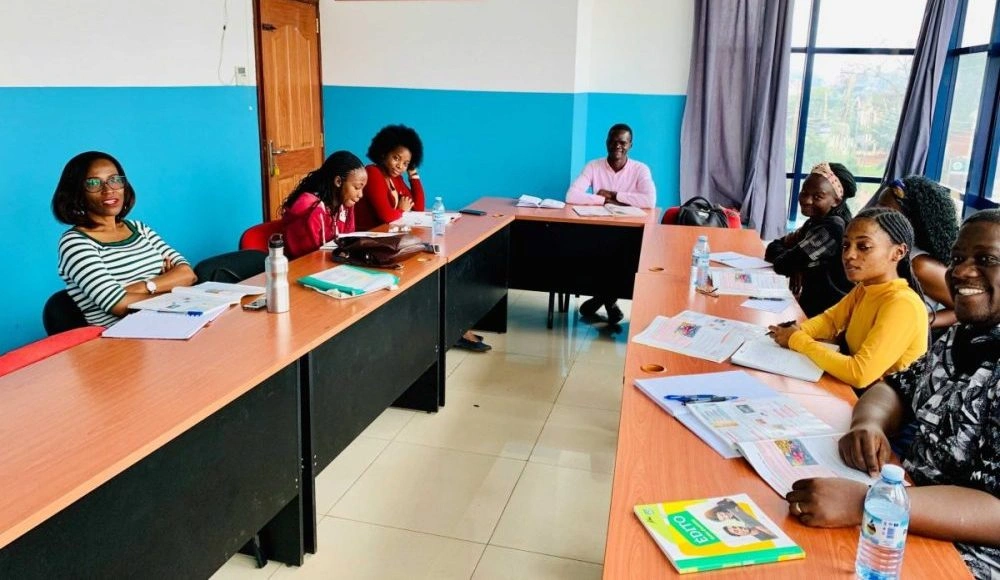
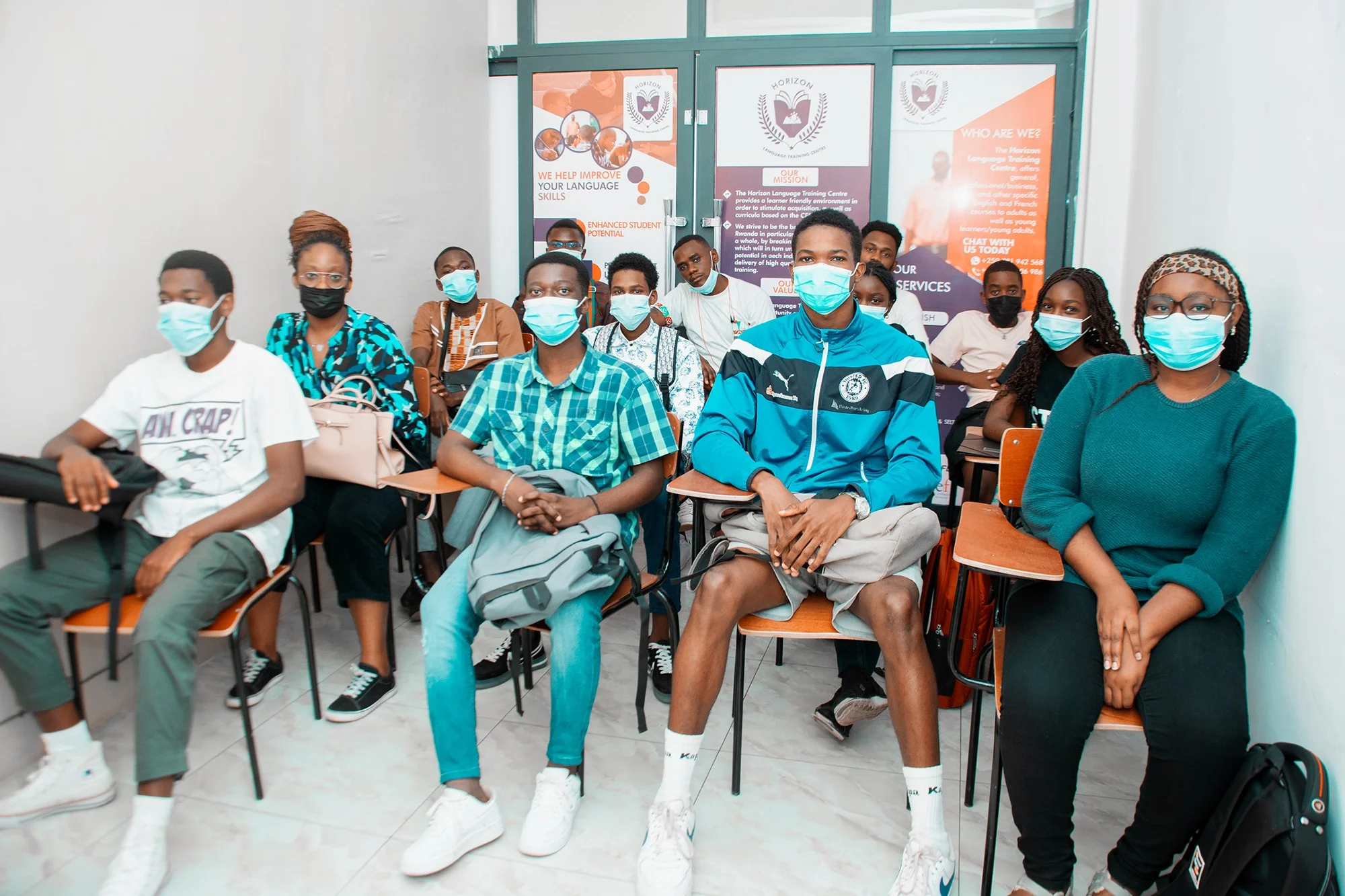
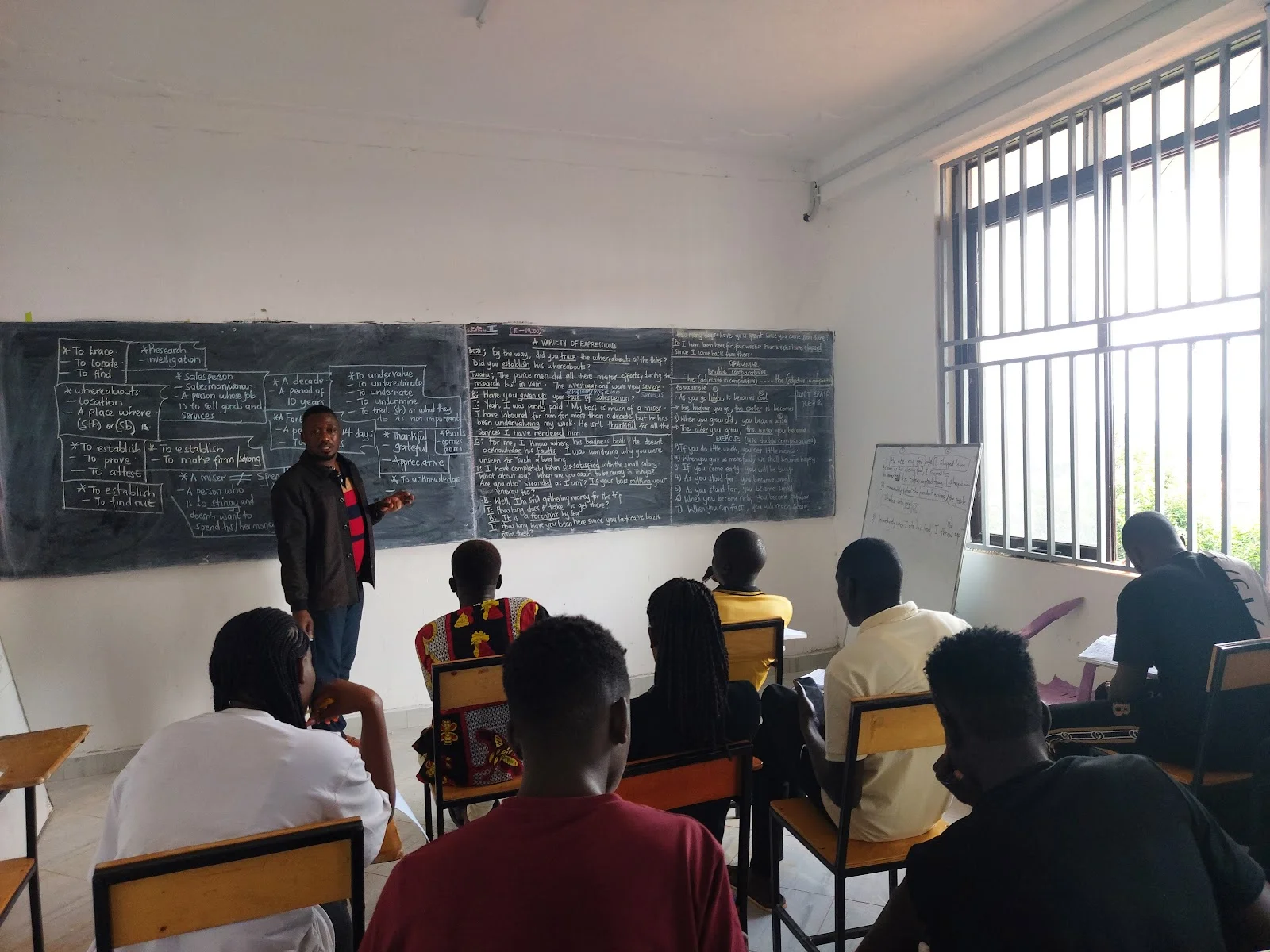
What does an adult language class actually look like? Imagine an evening French class for working adults. Learners arrive after work, chat briefly in French about their day, then the teacher introduces a practical topic, such as introducing yourself at a business meeting. The class listens to a short dialogue, learns key phrases and practises in pairs, playing the roles of colleagues meeting for the first time.
The teacher circulates, helping with pronunciation and gently correcting errors. After a short grammar focus explaining why certain phrases work the way they do, the class does a fun group activity, such as a quick quiz or role-play. The lesson ends with a recap and a small practical task to try before the next class, perhaps greeting someone in French or writing a short introduction email.
The atmosphere is relaxed and respectful. Many learners say the social side of evening classes, meeting other professionals with similar goals, is one of the best parts of the experience.
Group Classes vs Private Lessons for Adults
| Factor | Group Classes | Private Lessons |
|---|---|---|
| Cost | More affordable | Higher cost per hour |
| Pace | Set for the group | Fully personalised |
| Speaking practice | Practice with classmates | Maximum speaking time with teacher |
| Flexibility | Fixed schedule | Schedule around your life |
| Social benefits | Meet other learners and build networks | Private and focused |
| Best for | Steady progress on a budget | Specific goals, tight deadlines, busy executives |
Many adults combine both, joining a group class for regular practice and booking occasional private lessons for specific needs such as interview or exam preparation.
Online Language Classes for Adults in Kampala
Kampala’s traffic can make evening classes difficult. Online language lessons solve this problem, allowing adults to learn from home or the office without commuting. Online classes typically include live video lessons, digital materials, recorded sessions for revision and homework submitted online.
Online learning is also ideal for adults who travel for work, live in suburbs such as Mukono, Wakiso, Entebbe or Nansana, or have young children at home. Learn more about our online English classes.
Languages for Career Advancement
For many adults in Kampala, language learning is a career investment:
- Professional English for emails, reports, meetings and presentations.
- French for roles with international organisations, embassies and regional NGOs.
- German for careers or training opportunities in German-speaking countries.
- Chinese for business with Chinese companies and investors.
- Arabic for trade and employment links with the Middle East.
- Kiswahili for regional roles across East Africa.
Keep an eye on job opportunities that value language skills, such as vacancies shared on KCI Institute’s job opportunities page.
Languages for Study and Migration Abroad
Adults planning to study or work overseas often need proof of language proficiency. Common requirements include IELTS for English-speaking countries, French tests for francophone countries and Canada, and German certificates for Germany and Austria. Preparation courses focus on exam formats, strategies and practice tests, as well as building real language ability.
For English, see our IELTS preparation course. Always check the exact test and level required by your university, employer or immigration authority.
Languages for Expatriates Settling in Kampala
Expatriates moving to Kampala, including diplomats, NGO staff, business people and their families, often want to learn English, Luganda or Kiswahili. Even basic Luganda greetings make a big impression and help build relationships with colleagues, neighbours and market vendors. English helps non-native speakers navigate work and daily life, while Kiswahili is useful for travel across East Africa.
Many expatriates prefer private lessons at home or the office, scheduled around demanding jobs and family life.
Learning Luganda as an Adult: A Quick Introduction
Luganda is the language you will hear most often on the streets, in markets and in taxis across Kampala. Learning even a few phrases shows respect and helps you connect with people. Simple greetings include “Oli otya?” (How are you?), “Bulungi” (Fine or good), “Webale” (Thank you) and “Weraba” (Goodbye).
Adults learning Luganda usually start with greetings, numbers, shopping phrases and directions, then build towards everyday conversation. Because Luganda is spoken all around you in Kampala, every trip to the market becomes a practice session, and locals are usually delighted and encouraging when foreigners try to speak it.
Learning French or German for Opportunities Abroad
French and German are two of the most popular languages for Kampala adults planning careers, studies or migration abroad.
French opens doors to francophone Africa, international organisations, diplomacy and Canada’s immigration programmes, where French skills can be an advantage. It also helps in business with neighbouring countries such as the DRC, Rwanda and Burundi.
German is increasingly sought after by Ugandan nurses, caregivers, students and skilled workers exploring opportunities in Germany, Austria and Switzerland, where language certificates at specific levels are often required for visas, training and employment.
Both languages are best learned with structured courses that follow international levels, from A1 (beginner) upwards, with preparation for recognised exams when needed. Starting early is important, as reaching the required level for work or study abroad can take many months.
Corporate Language Training in Kampala
Companies and organisations in Kampala increasingly invest in language training for their staff. Corporate programmes can be delivered at your offices, at the school or online, and tailored to your industry and team. Common examples include business English for local staff, French for teams working with francophone partners, Chinese for staff of Chinese-linked companies and Luganda or Kiswahili for expatriate employees.
Corporate training improves communication, customer service and staff confidence, and is often more cost-effective than individual lessons.
How Much Do Adult Language Courses Cost in Kampala?
Costs vary depending on the language, level, class format, course length and school. In general:
- Group classes are the most affordable.
- Private lessons cost more per hour but offer faster, personalised progress.
- Intensive and exam preparation courses may cost more due to extra hours and materials.
- Online classes save on transport costs.
For English course costs, read our guide on how much studying English language in Uganda costs. To compare published fees at another Kampala-area institution, see the KCI Institute fee structure, and explore its language courses.
Overcoming Common Fears Adult Learners Have
“I am too old to learn a language.” Adults can and do learn languages successfully at every age. Motivation, consistency and good teaching matter far more than age.
“I will embarrass myself.” Good teachers create a supportive environment where mistakes are welcomed as part of learning. Everyone in the class is in the same situation.
“I do not have time.” Even two short lessons a week, plus a few minutes of daily practice, can lead to real progress. Online and weekend classes make it easier.
“I was bad at languages at school.” Adult classes are very different from school. Practical, conversation-based teaching often suits adults far better than traditional methods.
Balancing Language Study with Work and Family
Most adult learners juggle several responsibilities. A few strategies make it easier to stay on track: schedule lessons like important meetings, use commutes for listening practice, study in short focused bursts rather than long sessions, involve your family by teaching them new words, and choose online lessons on days when traffic or work makes travel difficult. Be patient with yourself; steady progress is far more valuable than perfection.
Signs You Are Making Progress
- You understand more of what your teacher says without translation.
- You can introduce yourself and talk about your work confidently.
- You start thinking in the new language for short moments.
- You recognise words in songs, films and conversations around you.
- You make fewer basic mistakes and correct yourself more often.
- Native speakers respond to you in the language rather than switching to English.
Noticing these milestones keeps motivation high and shows that your effort is paying off.
Tips for Adult Language Learners in Kampala
- Set a clear, specific goal, such as “hold a 10-minute conversation in French by December.”
- Choose a convenient schedule you can keep consistently.
- Practise a little every day, even just 15 minutes.
- Use apps, podcasts and videos during commutes.
- Find a language partner or join a conversation club.
- Use the language in real life, in restaurants, markets, embassies and cultural centres.
- Celebrate progress, however small.
- Label items at home or work with sticky notes in your new language to build everyday vocabulary.
- Review notes before sleeping, when memory consolidation is strong.
Cultural Activities That Support Language Learning in Kampala
Kampala offers many ways to practise languages outside the classroom. Cultural centres linked to various countries host films, exhibitions, talks and conversation events in their languages. Restaurants serving international cuisines, religious communities, sports clubs and international festivals all provide chances to hear and use new languages naturally.
For learners of Luganda and other local languages, traditional music performances, local radio stations and community events offer authentic practice. Taking part in these activities makes learning more enjoyable and helps you build friendships with native speakers.
Language Learning for Retirees and Lifelong Learners
Not every adult learner has a career goal. Retirees and lifelong learners in Kampala study languages for travel, to connect with grandchildren living abroad, to explore new cultures or simply to keep their minds active. Research widely suggests that learning new skills, including languages, can support mental agility as we age. Daytime classes, which are often quieter, and patient private tutors suit these learners especially well.
Combining Language Learning with Other Skills
Many adults combine language study with professional development. Digital skills, in particular, pair well with language learning, opening opportunities in remote work, marketing and technology. Uganda Language School offers options such as digital marketing tutoring and a beginner’s course to learn JavaScript, both of which also strengthen technical English.
How to Choose the Right Adult Language School in Kampala
- Define your goal and the language you need.
- Shortlist schools close to your home or work, or online.
- Check schedules that fit your week.
- Ask about teachers, class sizes and methods.
- Request a placement test and, if possible, a trial lesson.
- Compare total costs, including materials and certificates.
It is also helpful to see how different institutions present their programmes, for example by reviewing KCI Institute’s course list, its about us page and background on the Kenlink Comprehensive Institute.
How to Enrol
- Contact the school to discuss your goals.
- Take a placement test.
- Choose your course, format and schedule.
- Register and pay fees.
- Start learning and practise regularly.
For an example of an enrolment process at another Ugandan institution, see KCI Institute’s admissions page, its online application form and its student portal.
FAQ: Are There Evening Language Classes in Kampala?
Yes. Evening classes are among the most popular options for working adults in Kampala.
FAQ: Can Adults Learn a Language from Beginner Level?
Absolutely. Most schools offer beginner classes for adults with no prior knowledge.
FAQ: Which Language Is Most Useful for Adults in Kampala?
It depends on your goals. English is essential for work and study, French and German are valuable for international careers, and Luganda and Kiswahili help with daily life and regional connections.
FAQ: Can I Take Lessons at My Office?
Many schools offer private and corporate lessons at your workplace or online.
FAQ: Can I Learn Two Languages at the Same Time?
Yes, many adults do, especially when the languages are very different, such as English and Luganda. If you are a beginner in both, it can help to focus on one first and add the second once you feel more confident.
FAQ: How Long Does It Take an Adult to Learn a Language?
It depends on the language, your starting level and study time. Basic conversation can often be reached within a few months of regular lessons, while fluency takes longer.
Start Learning a New Language in Kampala Today
Language schools for adults in Kampala offer flexible, practical and supportive ways to learn English, French, German, Kiswahili, Luganda, Chinese and more. Whether you want to advance your career, study or work abroad, settle into life in Uganda or simply challenge yourself, there is a course and schedule that fits your life.
At Uganda Language School, we specialise in helping adults learn languages with confidence. Learn more about us, read more tips on our blog, and contact our team to book your placement test or trial lesson today. For further information on training options in Uganda, you can also visit KCI Institute.
Related Posts
French Schools in Uganda
Posted on